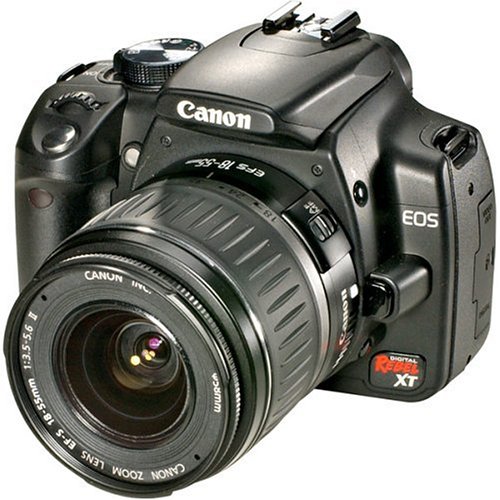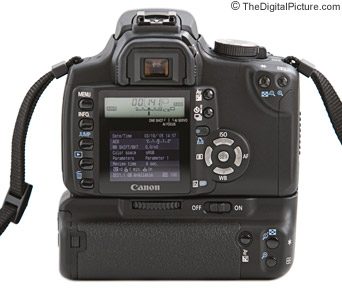
- The Canon EOS 350D introduced many astrophotographers to the wonders of digital imaging
Astroimaging records moments in space and time
Astroimaging is a great way to record the unforgettable moments of your journey to the beginning of the universe, photographing the night sky has never been easier for the amateur, and you can capture the memorable moments of your trip to show the grandchildren. The array of imaging equipment available today for the amateur astronomer looking for a suitable astroimaging camera to use as a time-machine-to-the-stars for never been more varied. We'll take you through the basics of cameras and their uses in astroimaging, starting with the modern camera, to help you decide just how you want to go about astroimaging and what kind of equipment you want to use to do the job.
The modern camera used for astroimaging uses electronic imaging sensors to help produce the images you'll take on your trip. Currently, there are two different types of electronic imaging sensors, CCD (charge-coupled device) and CMOS (complementary metal-oxide semiconductor), both essentially do the job the same way. Inside every modern camera tiny photocells, called pixels, and the circuitry to control the exposure time and read out the image are housed. The number of pixels needed for each view will vary from relatively small numbers for smaller images of planets or distinct celestial bodies, to millions of pixels (megapixel) for deep sky views of star fields.
Not all imaging sensors are designed and engineered equally, some imaging sensors produce color images, while others only create monochrome views of the universe. Modern color imaging sensors use a "Bayer" matrix, in which alternate pixels filter red, green and blue to produce the image, while a computer interpolates the data to smooth the image. Monochrome imaging sensors generally produce sharper images than color imaging sensors, but producing color images is more difficult, as you need to take red, green and blue exposures through separate filters and then use a computer to combine them to produce the color image.
Selecting the correct camera according to the astroimaging uses you have planned for your camera during your journey to the beginning of the universe is possibly the most important decision you can make in your desire to make sure the treasured memories of your trip to infinity and back are recorded for all time. You definitely want to make sure you're honest with yourself about what kind of astroimaging you want a camera for. Do you want to be able to take pictures of celestial objects in the day time sky? Can you use your astroimaging camera without having to connect it to a computer? The answers to these questions, and others, will help you determine the perfect astroimaging camera for "Journey to the Beginning of Space and Time".
http://www.canon.ca/inetCA/subCategoryHome?msegid=2&catid=17&scatid=129
- The Digital Rebel XT came out early in 2005