An Infinite Number of Galaxies?

- Just how many galaxies is an infinite number, anyway? NASA photos.
So many planets, so much diversity! Can life really be limited to Earth?
The galaxies you'll view during your journey to the beginning of the universe are like grains of sand on the beach, or snowflakes, with no two galaxies looking exactly the same to viewers. Astronomers have also viewed a number of different types of galaxies on the human journey to the beginning of the universe that they have each given a specific name, usually based on the overall shape of the galaxy. Composed of millions or even billions of individual stars, each particular type of galaxy viewed, so far, has also been given a designation, or name, by which we all can tell the difference between the individual galaxies in the infinity of galaxies we view in the night sky above us. It was Edwin Hubble who first did the work with photographic plates taken during the early part of the twentieth century that allowed him to determine the nebulous objects astronomers had been viewing for years were actually vast islands of stars we call galaxies. Edwin Hubble also catalogued the galaxies he viewed into three major classes, or types, according to their physical shape.

- Within the pinwheels of this spiral galaxy new planets and possibly new life could be born
A percentage of the galaxies you'll view during your journey to the beginning of the universe will resemble huge pinwheels and have been given the name spiral galaxies by astronomers viewing these objects. Spiral galaxies are generally composed of a bright central nucleus with older stars, with two sweeping arms of younger stars, open clusters, and diffuse nebulae unfolding in space and time. The Milky Way in which we reside is one such spiral galaxy among the multitudes of such galaxies in the universe and Sol is located about two-thirds of the way from the center of the galaxy.
Astronomers have broken down spiral galaxies into five subclasses of spiral galaxies, according to how tightly the arms of a spiral galaxy are wrapped around the nucleus of the spiral galaxy in question. Spiral galaxies with the tightest arms are Sa spiral galaxies, Sb spiral galaxies are next in order, with more loosely armed Sc, comparatively rare Sd spiral galaxies, and S0 spiral galaxies almost appearing to be a transitional form between spiral galaxies and another type of galaxy.
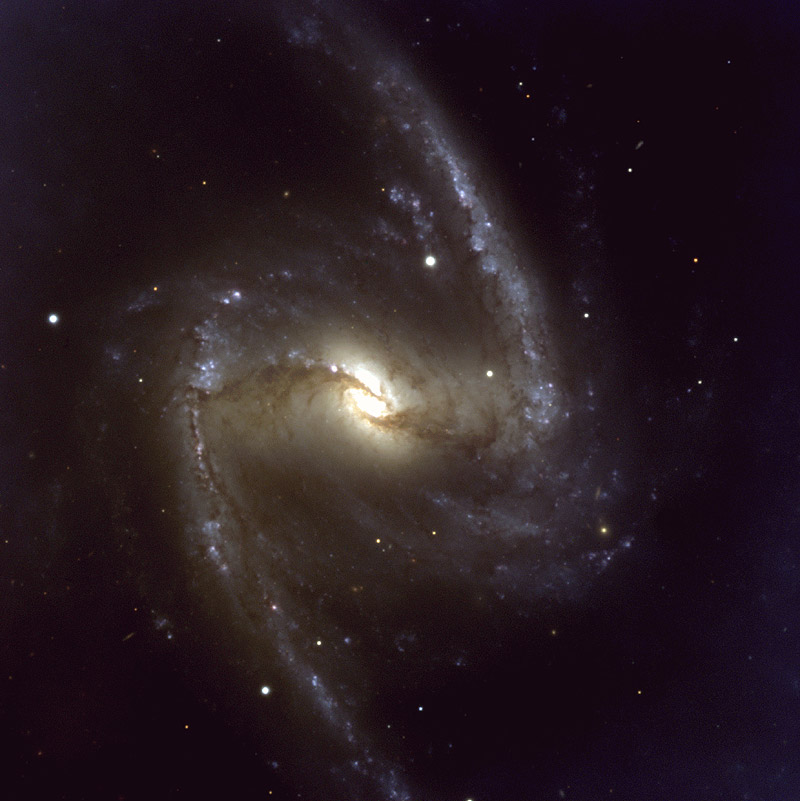
- NGC 1365 is a barred galaxy astronomers have been studying
Barred galaxies exhibit an odd, barlike feature passing through the nucleus of the galaxy, and the spiral arms of barred galaxies start to unwind from the ends of the central bar, rather than from the nucleus of the galaxy. Barred galaxies are also classified according to the tightness of the spiral arms and have designations SBa, SBb, and SBc.
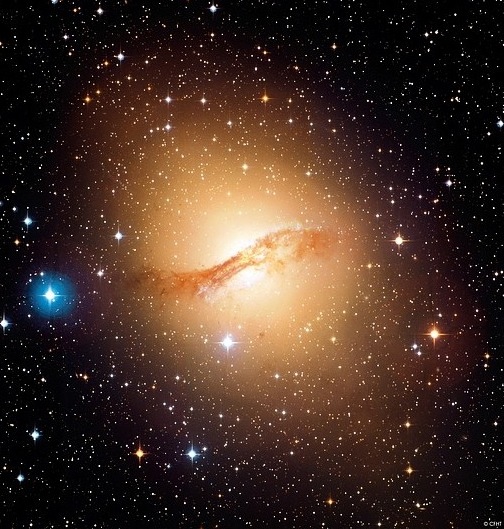
- Centaurus is an elliptical galaxy with an easily seen barlike feature
Elliptical are the most plentiful type of galaxy we have viewed during the human journey to the beginning of the universe. Elliptical galaxies actually have no hint of spiral arms and appear as huge, oval spheres with no discernible internal structure of any kind. Elliptical galaxies are classified according to how round they appear, with E0 elliptical galaxies appearing almost perfectly spherical, E4 elliptical galaxies looking like an oddly shaped football, and E7 elliptical galaxies looking flat as compared to the other classifications. Elliptical galaxies appear to be composed mostly of older stars and you'll notice they lack luminosity as you view them.

- Barnard is an irregular galaxy with no distinct shape
Galaxies that appear to have no distinctive shape are referred too as irregular galaxies and irregular galaxies have been viewed a lot less in the night sky than the other types. This doesn't necessarily mean irregular galaxies appear in fewer numbers in the universe, but it does mean that the percentage of the universe we have viewed from Earth appears to contain fewer irregular galaxies than the other types.
In : galaxies